Establish and Evolve your ISO Program
ISO/IEC Standards are globally recognized best practices that help companies design, implement, and operate InfoSec management systems.
ISO 27001 contains a set of requirements that organizations must follow to define their own scope, select the security controls they need, and monitor and improve the security program over time.
This core set of processes within ISO 27001 is called the Information Security Management System (ISMS).
Only the controls that the organization deems necessary via this ISMS process are assessed, so organizations do not need to implement every single control in ISO 27001.
The ISMS clauses are the core of ISO 27001 and contain requirements for the management of the InfoSec program rather than technical controls.
Examples of required processes in the ISMS clauses include:
- Determining the issues facing the organization
- Conducting a risk assessment
- Having document management processes
- Retaining change control processes
- Measuring security performance
With certified ISO/IEC Lead Implementers and ISO/IEC Lead Auditors, TrustedSec can help ensure that your ISO program is effectively designed, appropriately implemented, and achieves your objectives.
Find More Services We Offer
Related Links

“Having access to industry leaders right here at TrustedSec makes solving our clients' challenges easier.”Paul SemsManaging Director of Remediation Services
Paul Sems
Managing Director of Remediation ServicesPaul and his team work with clients to harden their environments against attacks and help them recover after security incidents.
Browse our blogs and webinars
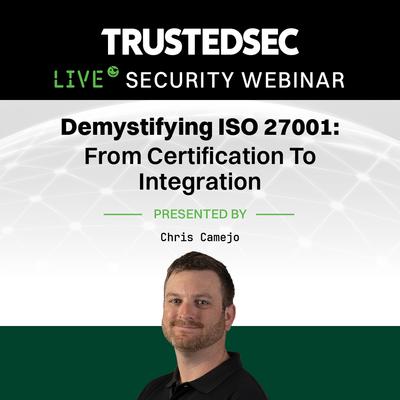
Demystifying ISO 27001: From Certification to Integration
Learn how to simplify your ISO 27001 compliance journey with Chris Camejo, Compliance Services Practice Lead, and discover how to navigate complexities and…

Navigating the Initial AI Best-Practice Framework Offerings
Discover the current landscape of AI best-practice frameworks, what each major framework offers, where it works well, where it falls short, and how to decide…

Two Config Files, Two Release Tracks, and One Very Bad Commit
Some of the best infrastructure improvements start with one bad afternoon. In the final part of this blog series, we walk through the configuration, release…
TrustedSec Joins the OpenAI Daybreak Defense Network
We're part of OpenAI’s Daybreak Defense Network—what does that mean for our customers? Go deeper, get to the evidence faster, and make real security…

AMA: Passkeys and Preventing Credential Theft
During this live AMA, you’ll have the chance to ask our experts anything about the process of implementing passkeys as the default and the best ways to help…

Logging is a Discipline, Not a Switch
Logging isn't a switch to flip; it's something to tune and maintain. In this blog, we outline a four-step Active Directory logging framework covering log…

HashcatRosetta: Reading the Rosetta Stone of Password Cracking
Meet HashcatRosetta—the Hashcat rule decoder you didn't know you needed. In Part 2 of this blog series, we go through how it translates, analyzes, and…
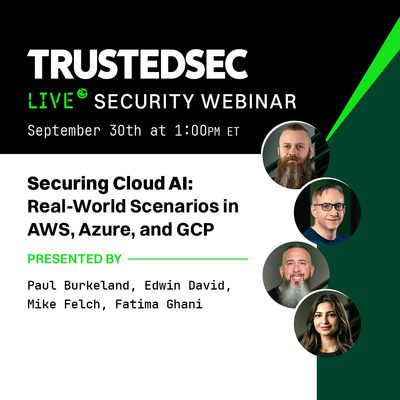
Securing Cloud AI: Real-World Scenarios in AWS, Azure, and GCP
Join our cloud security team as they dig into real-world exposures tied to popular AI-based services. Learn how to find the gaps to make AI more secure for…

What's New in hate_crack Since 2.0
You thought you knew hate_crack 👀 Well, version 2.0 changed that. In Part 1 of this latest blog series, we go through 13 new attack methods, menu…

Unpacking a laZzzy Donut
Six stages. Multiple encryption layers. One static analysis. In this blog, we unpack a multi-stage malware loader combining Python obfuscation, Donut…